
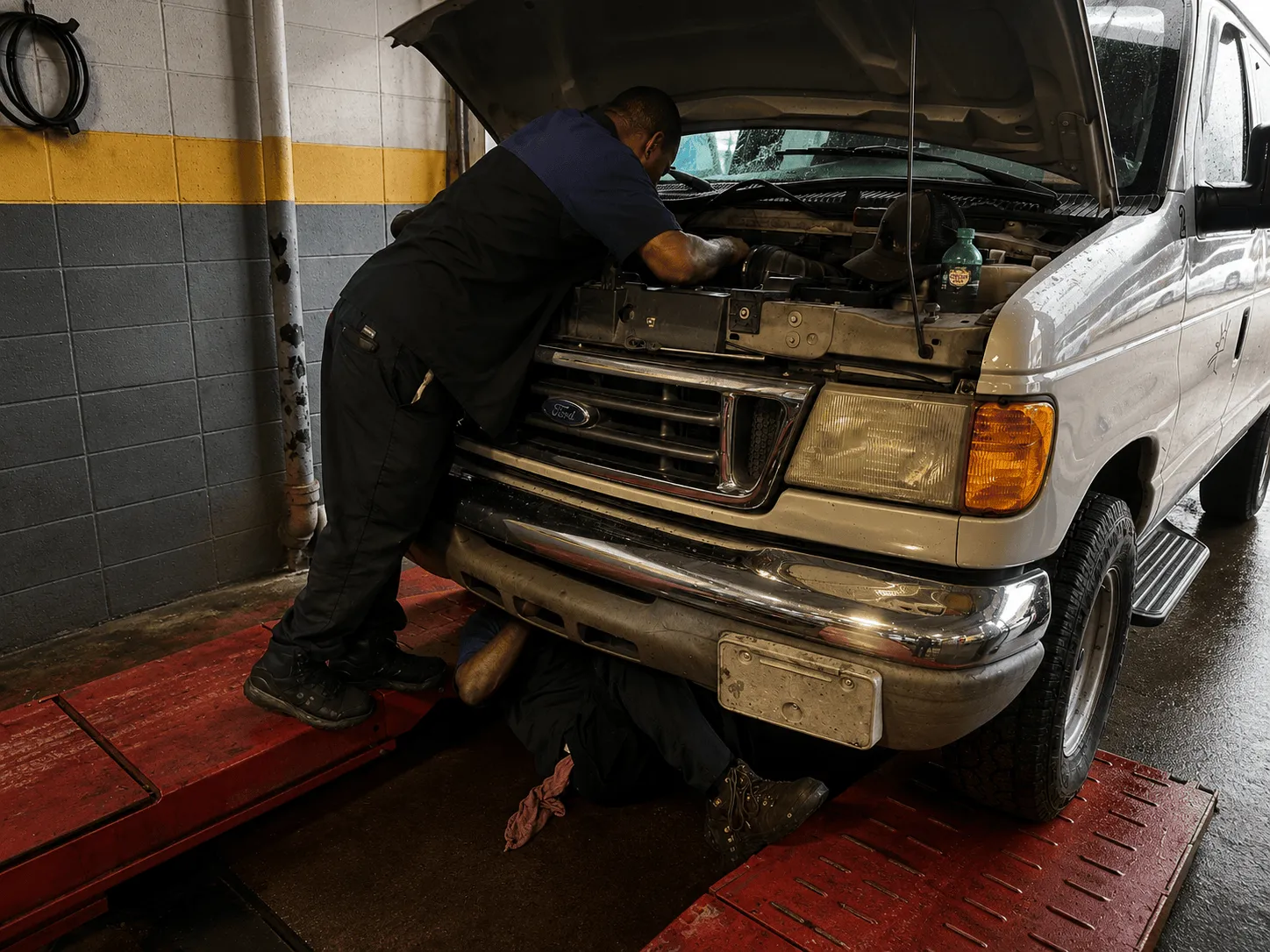
Brake work in Pearl, measured before it is quoted
Brakes are the service where fear sells the most parts. A shop tells you it is unsafe to leave, and you say yes to whatever they wrote down.
We do it the other way. We pull a wheel, measure the pad thickness and the rotor thickness with a gauge, and give you the numbers. If you have 6 millimeters of pad left, we tell you that you have months of driving and to come back before winter. If you are at 2 millimeters and grinding, we tell you that too, and we tell you why it needs doing now.
The brake inspection is free. Not free with a purchase. Free.
What a brake job at our shop includes
When we replace brakes on an axle, the job covers:
- New pads, matched to the vehicle and how you drive it. A truck that tows needs a different friction compound than a commuter sedan.
- Rotors resurfaced or replaced based on measurement against the minimum thickness stamped on the rotor hat, not a default assumption.
- Hardware. New clips, shims and slides. This is the step budget shops skip, and it is why their brake jobs come back squealing in six months. Pads bind in old, rusted hardware and wear unevenly.
- Caliper slide pins cleaned and lubricated. A seized slide pin will destroy a brand new set of pads on one side while the other side does nothing.
- Brake fluid checked. Brake fluid absorbs water over time, which lowers its boiling point and makes the pedal soft under heavy use.
- Road test and bed-in. New pads need a proper bed-in procedure to transfer material evenly to the rotor. Skipping it is how you get a pulsation two weeks later.
What brakes cost in Pearl
For most passenger cars and light trucks, pads and rotors on one axle generally run $300 to $550 installed, depending on the vehicle, the parts and whether the calipers are healthy.
Pads only, when the rotors measure in spec and the surface is true, come in meaningfully lower. This is a real option on a lot of vehicles and we will offer it when the measurements support it.
Where costs go up: seized calipers, damaged brake lines, a parking brake that has rusted solid, or a rear disc setup with an electronic parking brake that needs a scan tool to retract. We find those on inspection and tell you before we start, not after we have your vehicle apart.
What the noises actually mean
A high-pitched squeal when you brake is usually the wear indicator, a small metal tab designed to contact the rotor and make that exact noise. It is the tire equivalent of a low fuel light. You have some time, but not unlimited time.
A grinding, metal-on-metal sound means the friction material is gone and the pad backing plate is cutting into your rotor. Every mile from here is turning a pad-and-rotor job into a pad, rotor and possibly caliper job. Come in now.
A pulsation or shudder in the pedal at highway speed is usually a rotor problem: either warping from heat, or uneven pad material deposits. Sometimes it can be corrected by resurfacing, sometimes not.
A soft or sinking pedal is different and more serious. That points at fluid, a leak, or a failing master cylinder. Do not drive on it.
A squeal only when the brakes are cold and wet in the morning is often just surface rust burning off, and is normal in Mississippi humidity.
Why local driving is hard on brakes
Stop-and-go traffic is what kills pads, and the Highway 80 corridor through Pearl is stop-and-go most of the day. If your commute is short trips around Flowood and Lakeland Drive, your brakes never get a long cool-down and they never fully dry out, which accelerates both wear and surface rust.
Towing changes the math entirely. A truck pulling a boat to the Reservoir or a trailer up US-49 puts far more heat into the brakes than the same truck empty. If you tow, your inspection interval should be shorter and your pad choice should reflect it.
Serving Pearl, Brandon, Flowood, Richland, Florence and Jackson
We are at 3117 Hwy 80 East in Pearl, minutes from I-20 Exit 48, and we handle brake work for customers across Brandon, Flowood, Richland, Florence and Jackson.
Get a free brake inspection
Call (601) 939-6512 or send a quote request. We will measure what you have and tell you the truth about it.